What Cove Health does
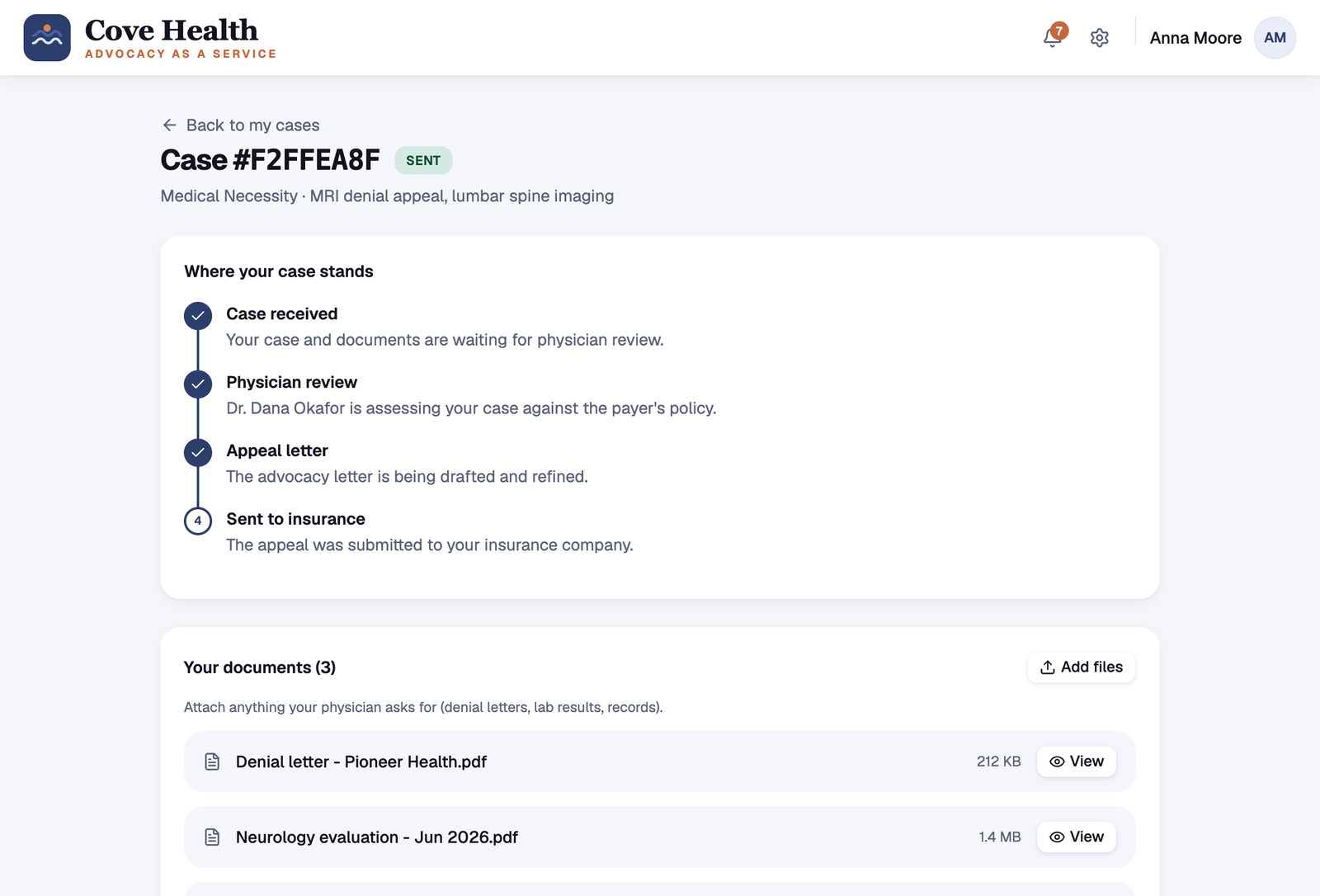
SayYou upload your denial letter and your records. A licensed physician reads the case, and if it has merit they write the appeal, citing the guidelines and your own clinical history, and send it to whoever decides.
NotThey get your denial overturned.
The plan decides, not us. Saying otherwise is an outcome promise, and under the FTC's Endorsement Guides your claim counts as ours.
Who writes the letter
SayA licensed physician writes it and signs it. It is not a template you fill in, and it is not a chatbot.
NotAn AI writes your appeal for you.
Software organises the guidelines and prior decisions; a physician reviews the case and writes the letter. Getting this backwards misdescribes the product.
What it costs
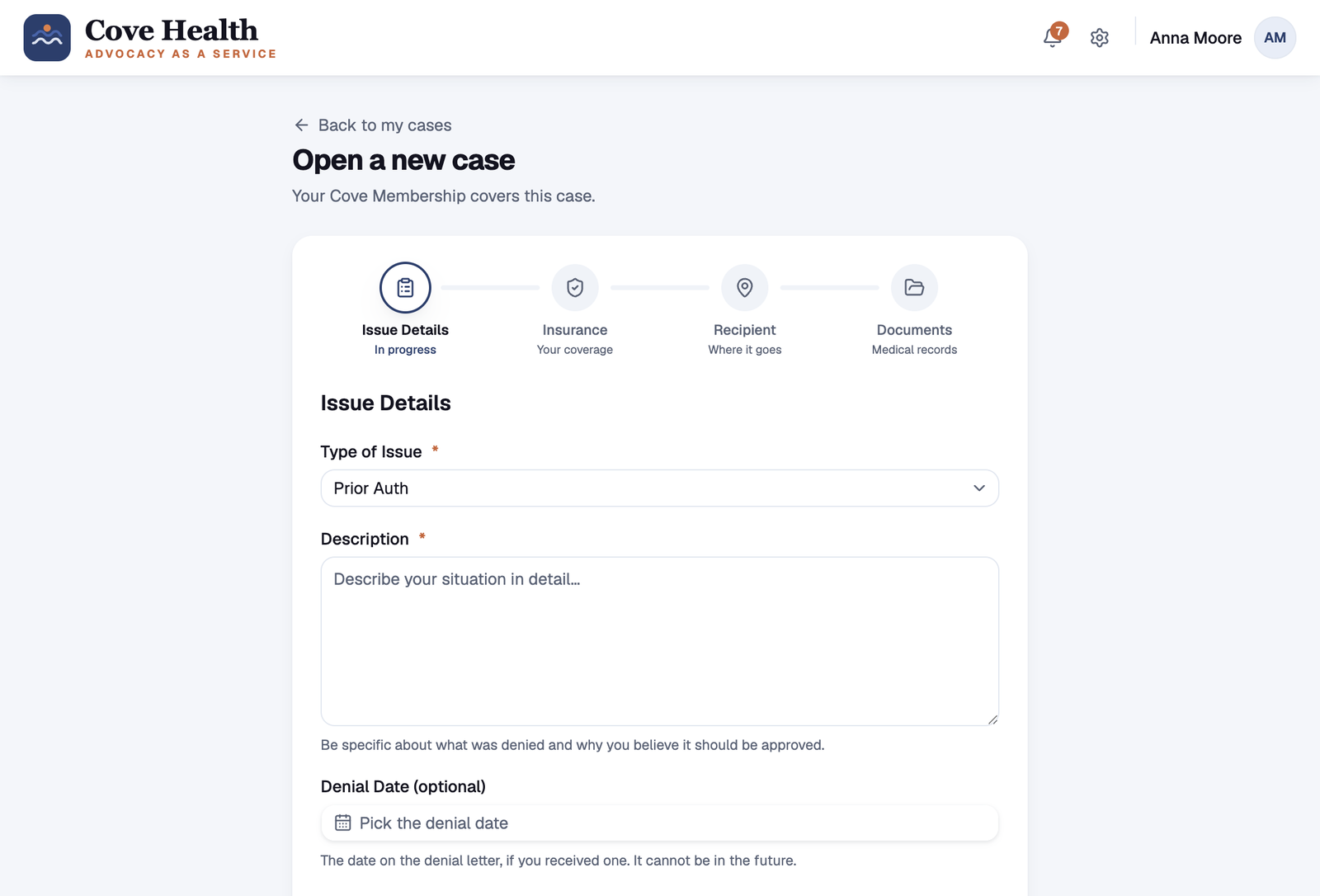
Say$100 for a single case, or $29.99 a month for ongoing advocacy. Two-month minimum, then month to month.
NotIt basically pays for itself.
That is a financial claim about an outcome nobody can predict. Quote the price and stop there.
The honest part
SayIf a physician reviews the case and does not think it has merit, they tell you that instead of taking it forward.
NotThey take every case.
They do not, and saying they do sets up the exact disappointment that turns a good video into a complaint.
Deadlines
SayAppeal windows are short and they start on the date printed on the denial letter, commonly 180 days on employer and marketplace plans, and shorter on some. Check your own letter, it is the authority.
NotYou only have 30 days, so hurry.
Real deadlines are worth stating; invented ones are deceptive urgency. Point people at their own letter rather than at a countdown.
The number worth quoting
SayOf 86 million denied in-network claims in 2023, patients appealed 376,508, under 1%. Almost nobody appeals.
NotMost appeals succeed.
The first figure is public and sourced to KFF, so put the source on screen. The second has no source we can stand behind, so it does not get said.
What Cove Health is not
SayCove Health is a patient advocacy service, not a law firm, and nothing in the video is legal or medical advice.
NotExplaining what a specific viewer should do about their own claim or their own condition.
General information is fine. Directing one person's care or claim is not, whoever is speaking.